
If you’re curious about tuning down your electric 6-string guitar and don’t know where to start with string gauges, allow the following charts to serve as starting points to get you in the right direction. I started with the two most common guitar scale lengths (24.75″ & 25.5″) and will provide additional charts for other scale lengths, cover 7 & 8 string guitars as well as bass and acoustic guitar string gauges.
Keep in mind that a change in string gauge and tuning rarely leaves your neck under the same tension, and you’ll probably have to adjust it along with the rest of your setup.
Not sure what your guitar’s scale length is?
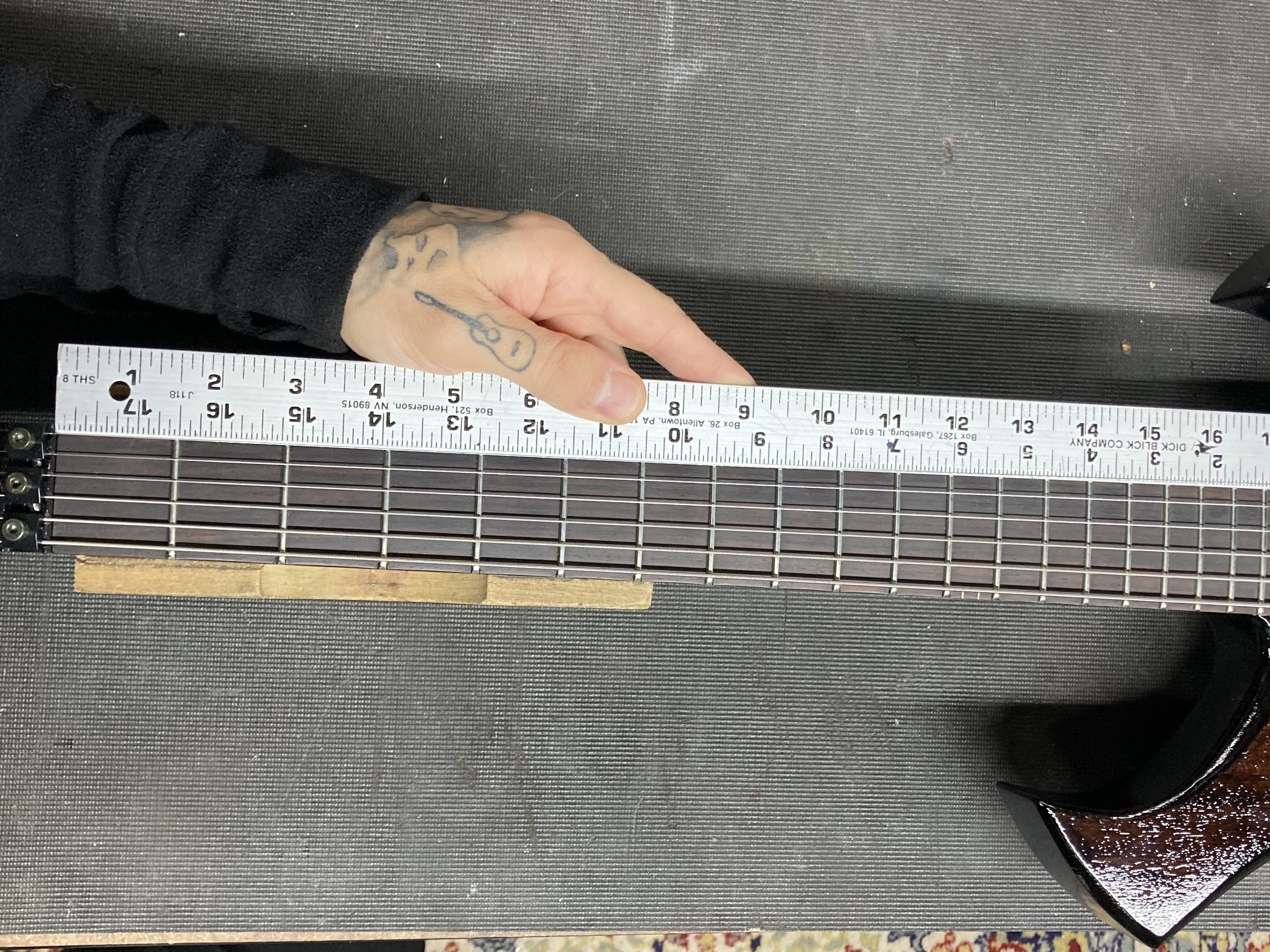
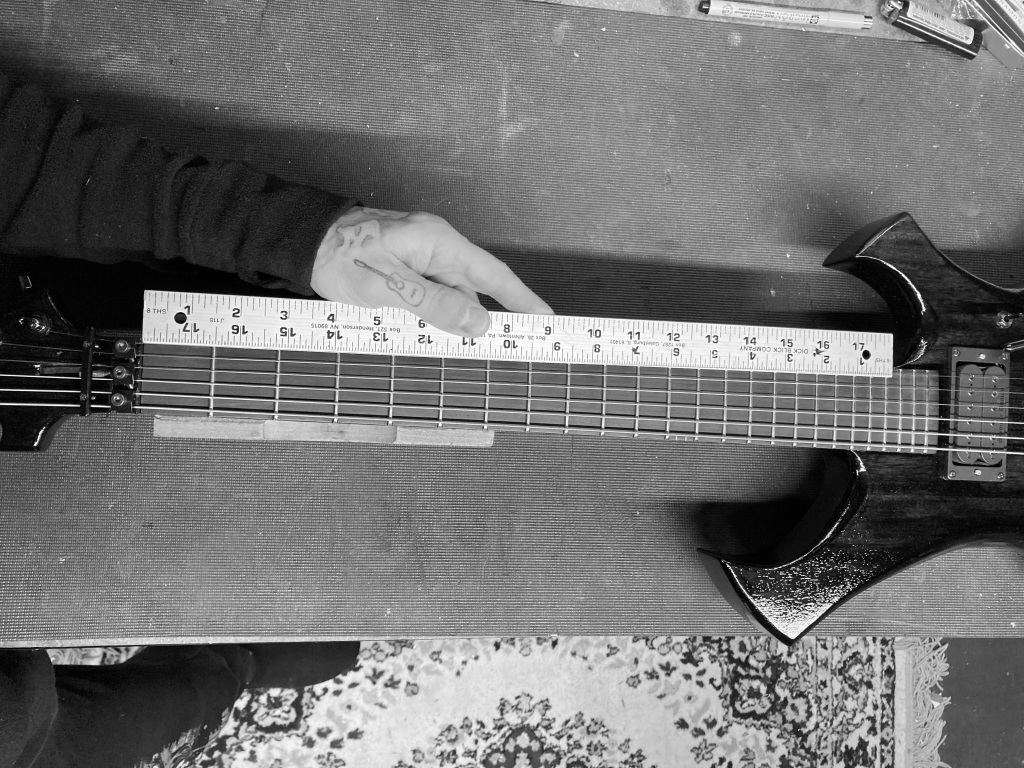
If you’re not sure what your guitars scale length is, measure the distance between the front of the nut to the middle of the 12th fret (where the fret slot is located) and double that measurement to find the scale length.
Measuring from the front of the nut to any string saddle for the full measurement is flawed do to the compensation of a string’s saddle for intonation. Measuring the high E saddle could give a relatively close number, possibly 1/16″ to 1/8″ longer than the true scale length. This would pose no real problem since popular guitar scale lengths are not that close, but the PRS scale length is 25″ which is only a 1/4″ longer than the common 24 3/4″ scale of a Gibson. Measuring the length of a low E string on a Gibson scale length could lead the novice to a false measurement.
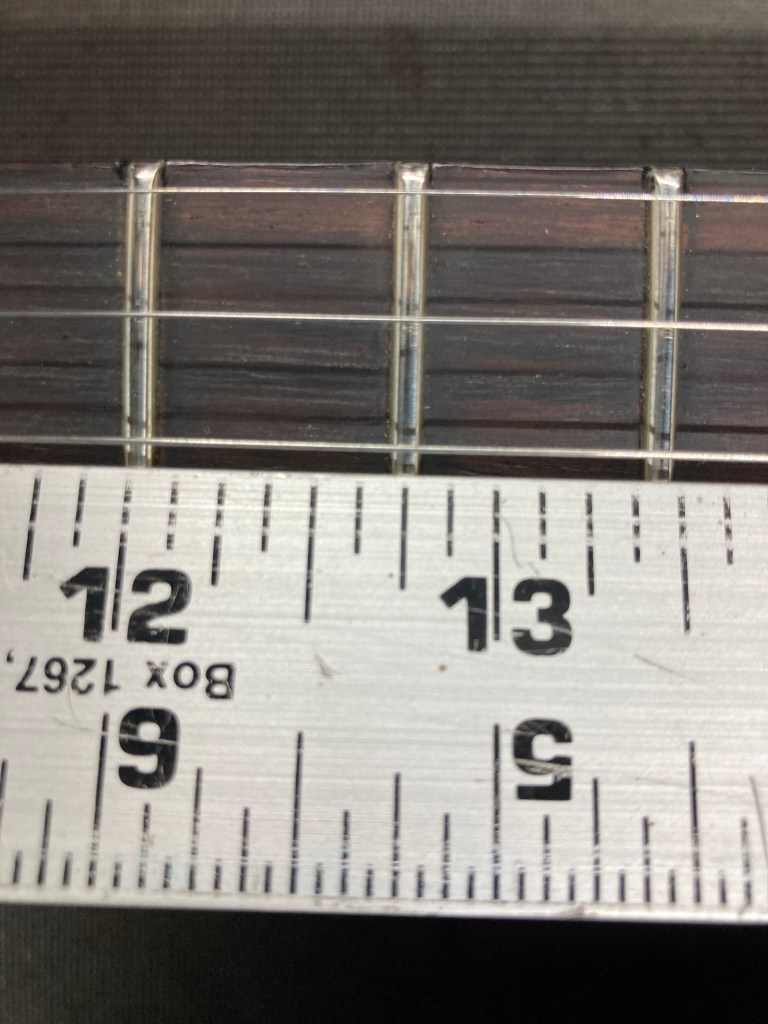
Examples of measurements taken at the 12th fret:
- 12 3/8″ = 24 3/4″ (24.75″)
- 12 1/2″ = 25″
- 12 3/4″ = 25 1/2″ (25.5″)
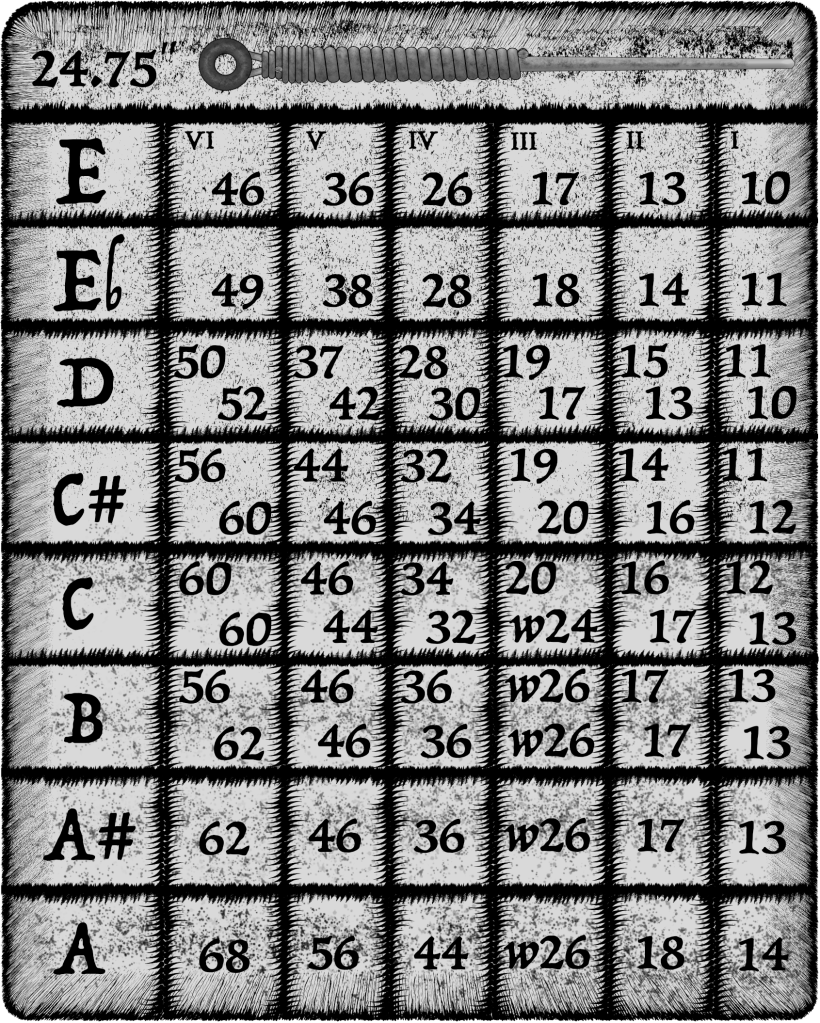
24.75″ Scale Length
This scale length is often referred to as “Gibson” scale length. Rightfully so, it covers a majority of their catalog, and almost any Gibson-inspired model on the market.
25.5″ Scale Length
Often referred to as “Fender” scale, this scale length extends outside of most Fender guitars and across hundreds of brands’ guitars. You can almost guarantee any “Super Strat” or Tele copy has this scale length. ESP, Jackson, B.C. Rich, Kramer, and dozens of other guitar companies followed in many of Fender’s steps, including this longer scale length.
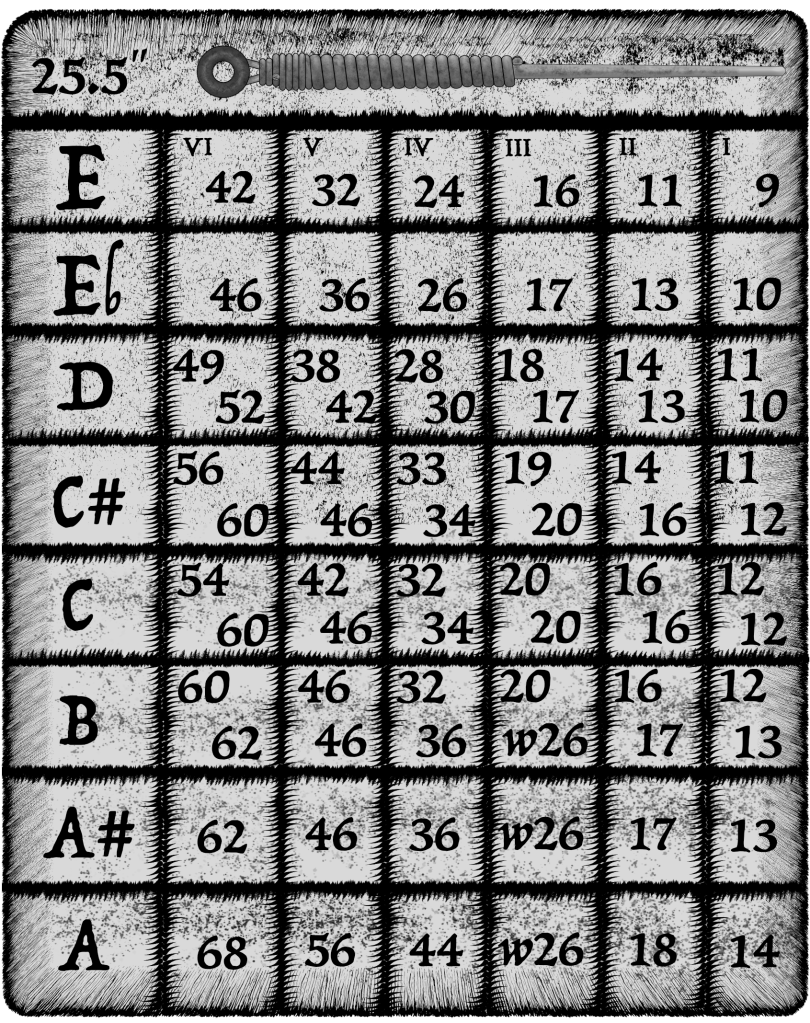
Notes:
- These string gauges recommendations are based on what I’ve experimented with on my own guitars as well as 15+ years of clients guitars on my bench.
- The “sets” increase in tension modestly as the tuning is dropped. The additional tension will also help keep the action lower than a lighter set.
- Thicker strings push more bass frequencies and add tension while lighter strings with provide less low end and more treble. Lighter strings also benefit those who prefer a slinkier feel.
- Some variations are included on some tunings to cover emphasis on a heavier bottom end, drop tuning, or the mixed feelings many have on a wound 3rd string (all issues that will be addressed in coming articles).

